Smartcat Studios
  • Home
    • Social Media
  • Patterns
  • Support
    • Skill Levels
    • Video Tutorials >
      • Knitting Videos
      • Crochet Videos
      • Other Videos
    • Errata
  • Services
    • Commissions
    • Teaching Classes
  • Contact
    • Contact
    • Feedback
  • About
    • Testimonials

Technique of the Week: Foundation SC Cast On

6/26/2015

0 Comments

 
I don't know about all of you, but I find that it is sometimes really difficult to get a chain cast on that is loose enough to crochet into, without being so loose that it puckers or hangs along the beginning edge. If you have the problem of it puckering, you can disguise it by working over the remaining loops of the chain with single crochets after you are finished with the project, but it is so much nicer to just have a really nice beginning edge that looks nice from the beginning.

I discovered the Foundation Single and Double Crochet Cast Ons quite a while ago and use them whenever possible. They can be substituted whenever the first row of your pattern is a single or double crochet row. Sometimes even when the first row is a pattern row, you can start with the Foundation Single Crochet Cast On and have a slightly bigger/bulkier beginning, which will not look out of place. It is a judgement call as to deciding when to exchange beginning cast ons, but once you try it, I think you will agree that it leaves you with the perfect start to a wide variety of projects. 

To start the cast on, you will chain 2 stitches for the single crochet or 3 stitches for the double crochet. Insert your hook into the 2nd/3rd chain from the hook (yarn over the hook first if doing the double crochet) and pull up a loop. Chain 1 stitch, then complete the single or double crochet as you normally would. For the next and all remaining stitches, insert the hook into the chain stitch (yarning over first if doing the double crochet), pull up a loop, chain 1, then complete the stitch. When inserting the hook into the chain stitch, I prefer to go through the hump of the chain, leaving the top two loops to face the bottom edge (creating a nice chain stitch edge, which will match your last row in a lot of cases). Be sure to only work the base number of stitches that you need, ignoring any turning chains, before you start on Row 2 of your pattern. 

This technique can also be used when beginning an in-the-round project, like a bag, pouch, basket, hat, etc. You will slip stitch to join with the first stitch, then continue on with Round 2 of your pattern. You will notice that this join leaves a gap at the very edge of your project, but this can be solved by using the tail to sew the gap closed. Cast on a new project today and try out this fun and useful technique.

A video of the Foundation Double Crochet Cast On can be seen here.
0 Comments

Perfect Baby Sweater for Summer

6/25/2015

1 Comment

 
Picture
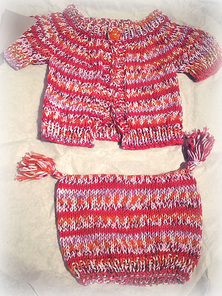
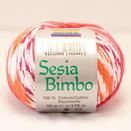
I love to knit and crochet baby sweaters, hats, booties and everything else that make perfect baby shower or new baby gifts. They are so quick to make and always turn out so cute. I usually try to make at least two pieces that coordinate and so when a friend asked if I could make a cute sweater for her new goddaughter, I agreed and dug into my stash for just the right yarn. I settled on Sesia Bimbo. This is a yarn from Italy that is 100% cotton in a fingering weight. It comes in some fun prints that stripe into almost a fair-isle pattern. It was the perfect yarn for the job and I loved working with it. It flowed smoothly on my needles, had no extra joins, did not split and washed up into a cuddly, soft texture.

Picture
The pattern I chose was Marianna Mel's Short-Sleeved Perfect Boy or Girl Top Down Jacket. I had knit this pattern before as a shop sample for Quintessential Knits and loved how quick this project was to make. I believe it took me about two - three days of casual knitting to complete and was fairly simple to make. I originally had a few issues keeping track of where I was on each row, since the number of stitches worked between increases is repeated multiple times on each row, however as soon as I started using markers to mark the increases (one before the first increase and one after the second increase of each section), the sweater just flew off the needles. It is worked from the neckline down with a round yoke, adding the button band as you go. The sweater is seamless construction with you placing the sleeve stitches on waste yarn while you finish the sweater and then picking them back up to knit the sleeves in the round. The sweater is also very versatile to a variety of yarn weights and so you could easily increase the size of the sweater by working it with larger yarn and needles. As I had a bit of yarn left after completing the sweater, I cast on some stitches and made the cute tassel cornered hat to go with it. The yardage in one skein was the perfect amount to complete the sweater and the hat with the tassels.

My friend loved the finished results and couldn't wait to see her goddaughter in it. I wish them both a lot of joy and happiness in the sun.

1 Comment

Seashore Kerchief

6/23/2015

0 Comments

 
Picture

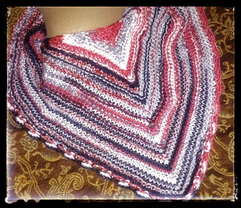
To experiment with this yarn, I decided to work the Seashore Kerchief pattern by Churchmouse Yarns. It had been in my Ravelry queue for awhile, waiting for just the right yarn to appear. I decided to take a chance with the Kimera yarn and see what happened and OH do I LOVE the results. Kimera was an absolute delight to work with. There were no issues with knots, splitting or tangles in the ball. The Seashore Kerchief pattern was very quick, I think I completed it in a single day. It was well written and very easy to understand and work. I am delighted with how the kerchief turned out, my only criticism would be that I would have preferred it to be a little larger, as there was not enough of a tail for it to be tied or wrapped around my neck. If I make another one, I will either cast on extra stitches or knit on larger needles with larger yarn. (NOTE: I did not check my gauge, so it is possible that my gauge was off, which is what resulted in the smaller size.) What I ended up doing is just sewing the ends together, as I wove in my ends. It is loose enough to slip over my head, so it works perfectly. I love the decorative cast on edge and the kitchener BO at the neckline was a unique finish. I had not previously worked a shawl in this manner and as a designer I am always interested in new techniques for finishing or starting projects.


Definitely a pattern I will work again or will use as a template with a new pattern stitch.

Picture
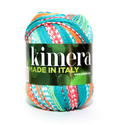
A few months ago, I entered a contest on Facebook that was hosted by Jimmy Beans Wool. They were promoting their Beans for Brains scholarship, so for each share on Facebook and Twitter, you received an entry into the contest. I won one of the prizes and received a box full of yarn in the mail. One of the types of yarn in the box was Adriafil Kimera. This is a 100% Egyptian mercerized cotton, DK weight yarn in a variety of fun variegated prints. The balls of yarn look very unusual with their speckled sections of color, but oh did it knit up in a wonderful way.

0 Comments

Dangling Conversation Shawl

6/20/2015

0 Comments

 
Picture
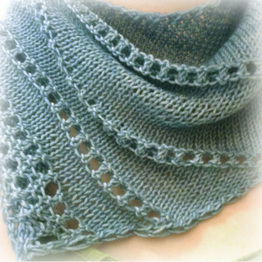
Last week I had the opportunity to work up the Dangling Conversation by Mindy Ross. This pattern is a delightful, asymmetrical shawl that is worked end to end. You cast on just a few stitches, work until it is as large as you wish or have yarn for and then bind off. The shawl has optional bead instructions and is a simple stockinette pattern with eyelet rows at decreasing intervals, perfect for watching TV or those times where you don't want to have to concentrate heavily on the pattern. It was a fairly well written pattern and was very easy to follow. The pattern includes both written and chart instructions and therefore will appeal to a wide variety of knitters.

I worked this pattern with a new, to me, yarn by Cedar House Yarns, Sapling Sock in a gorgeous light blue color. The yarn was an absolute delight to work with. I had no issues with it splitting on me and there were no irregularity in the hank of yarn that I worked with. It washed up well, with just a little bit of dye bleeding out into the water (hardly noticeable). The shawl blocked out well, is super soft and drapes well.

I made a few adjustments to the pattern, as I really like having a slip stitch selvage stitch on the edges of my shawls whenever possible. You can find the exact adjustments on my project page at Ravelry. If you would like to see the finished shawl, it will be on display as a shop sample at Quintessential Knits in Duvall, WA.

0 Comments

    Tandy Imhoff

    Tandy has been designing knit and crochet projects since 2009. She recently started teaching as well. Here she will share her design process and finished projects by other designers.

    Archives

    June 2015
    December 2014

    Categories

    All
    Commission
    Crochet
    Knitting
    Noah
    Projects
    Review
    Technique

    RSS Feed

Powered by Create your own unique website with customizable templates.